
Equity Audit Praises Cambridge Schools’ Overall Instruction but Finds Gaps in Student Support
Updated February 24, 2026, at 1:18 p.m.
A two-year equity audit of Cambridge Public Schools found that the district is offering strong core instruction, but has failed to consistently provide academic and behavioral interventions for students who need the most support.
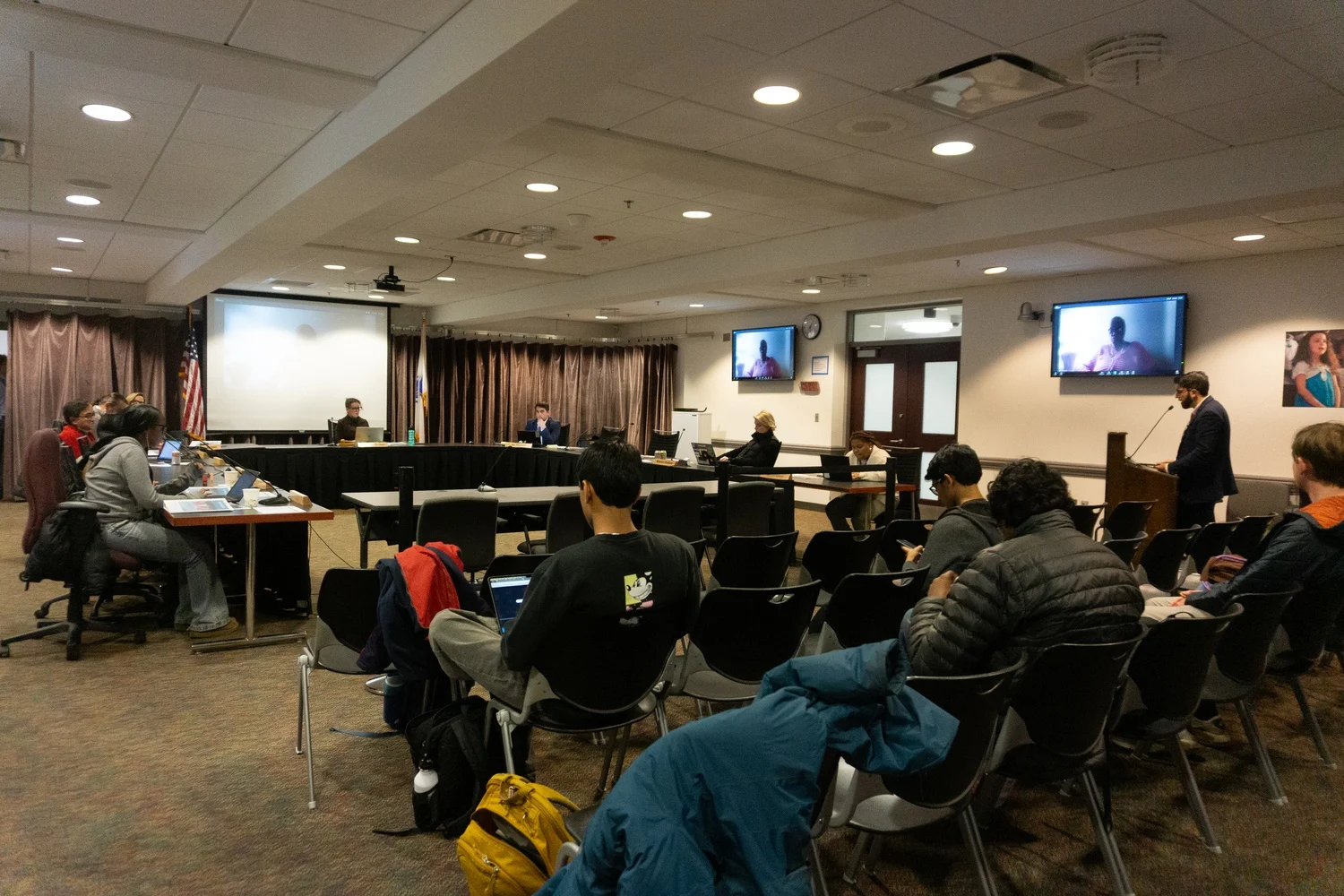
The audit — conducted by the Harvard-backed education consulting firm Thrive! and presented during a Monday public meeting of district leaders and policy experts — found that CPS has underinvested in identifying struggling students early and delivering targeted interventions to them across schools.
Omolara O. Fatiregun ’00, the founder and CEO of Thrive!, said the report found several strengths at the school level, including robust staffing, intervention tactics that aim to provide stigma-free access to support services, and strong “Tier 1” instruction, defined as teaching delivered to all students.
But the audit, which began in 2024, found that the school district has underinvested in Tier 2 and Tier 3 interventions — targeted small-group supports for students who need extra help, and intensive individualized instruction for students with the greatest academic or behavioral needs, respectively.
The report said inconsistent access to “Tier 2” and “Tier 3” interventions has contributed to persistent achievement gaps for low-income students, English language learners, students with disabilities, and students of color.
“A consistent pattern emerges: schoolwide averages can look strong while specific student groups experience very different outcomes,” it stated.
Fatiregun said the consequences of not investing enough in Tier 2 and 3 supports are borne most heavily by students who may already face structural disadvantages.
“This is the most critical equity factor, because if you look at the students who are in tiers two and three, they are predominantly low income and students of color,” she said. “If this population of students is not getting the intensive support or the targeted supports that they need, they predictably will continue to fall behind.”
CPS has long struggled to address achievement gaps among students — an issue students and alumni have attributed in part to a lack of individualized student support.
“There are elements of the report that I believe will be invaluable to assessing our progress and shedding light on areas of needed growth, even if in some instances, the specific prescriptions may depart to a degree from the strategies developed in more recent years,” Superintendent David G. Murphy said Tuesday.
The audit also examined chronic absenteeism, finding it to be more prevalent in Cambridge high schools than across the state. In the 2023-24 school year, approximately 34 percent of Cambridge high school students were chronically absent, compared to about 25 percent statewide.
Anthony D. Galluccio, former Cambridge mayor and Cambridge School Committee chair who sat on a panel at the presentation of the final report on Tuesday, attributed chronic absenteeism to racial and socioeconomic divides that shape students’ sense of belonging in school.
“I think kids are way smarter than we are, and if you’re a kid who knows they’re at a big disadvantage — and in Cambridge, it’s not a little disadvantage now; it’s a $6 million home and public housing — you start to realize there’s real differences,” he said.
“Like who sits together and who hangs out together, and who’s in travel sports and who’s not — and you start to decide, this isn’t the track for me,” he added.
Cambridge Community Foundation President Geeta Pradhan framed the audit as “one piece” of a complex educational puzzle, urging attendees of the Tuesday presentation to move beyond criticism of the district’s shortcomings toward implementation of solutions.
“We are very good at finding that glass half empty, but there’s so much good that’s happening that we need to look at the glass half full and invest in strategies that are showing results,” she said.
The panel also featured Rahn Dorsey, former chief of education for the City of Boston; Paul Reville, a professor at the Harvard Graduate School of Education; and Heidi Cook, principal of the Baldwin School.
The report concluded with three recommendations for the district: implementing academic and behavioral programs and tracking their results, operationalizing the tiered support system by regularly reviewing student outcomes across racial and socioeconomic groups, and combatting chronic absenteeism through home visits, mentor pairing, and climate surveys.
Cook said meaningful progress will only come if school leaders are willing to acknowledge areas of weakness and bring problems into the open.
“I hope that we’re braver,” she said. “Bringing voices to the table that might say things that we’re not super comfortable hearing, making things transparent that we need to look at openly.”
“Less fear, more bravery,” she added.
Correction: February 24, 2026
A previous version of this article incorrectly stated that the audit began in 2024. In fact, the audit concluded in 2024.
A previous version of this article incorrectly identified Rahn Dorsey as a former Massachusetts Secretary of Education. In fact, Dorsey is the former chief of education for the City of Boston.
—Staff writer Jaya N. Karamcheti can be reached at jaya.karamcheti@thecrimson.com.
—Staff writer Tess E. Sumner can be reached at tess.sumner@thecrimson.com.
Want to keep up with breaking news? Subscribe to our email newsletter.
Have a tip for The Crimson? Share it confidentially.